Creative
Unlocking Stress-Free Holidays: My Mom’s Genius Hosting Philosophy
Author: Rachel Nguyen
 The holidays are supposed to be a time of joy, connection, and celebration. Yet, for many, they become a source of overwhelming stress—endless to-do lists, frantic shopping, and the pressure to create the “perfect” gathering. I’ve watched friends and family members spiral into exhaustion, their living rooms filled with tension instead of laughter. But growing up, my mother showed me a different way—a philosophy rooted not in perfection, but in presence. Her approach transformed our holidays from chaotic obligations into cherished rituals, and it’s a wisdom I’ve carried into my own life.
My mom never had a meticulously color-coordinated table or a five-course gourmet meal. Instead, she had a quiet confidence that seemed to say, “The magic isn’t in the details; it’s in the people.” I remember one Thanksgiving when the turkey emerged from the oven an hour behind schedule. Panic? Not for her. She simply shrugged, sliced some cheese, and declared, “We’ll have appetizers and stories first.” That delay became one of our fondest memories—a spontaneous, laughter-filled hour where no one was rushing, and everyone was fully there.
The Foundation: Intentional Simplicity
At the heart of my mom’s hosting philosophy lies intentional simplicity. She understood early on that less can indeed be more. Research from the Journal of Environmental Psychology suggests that cluttered environments can increase cortisol levels, contributing to stress. By keeping decorations minimal and meaningful—a few hand-picked pumpkins in autumn, a single strand of twinkling lights in winter—she created a calm, inviting space. “A clean, open room lets people breathe,” she’d say. “And breathing is where joy begins.”
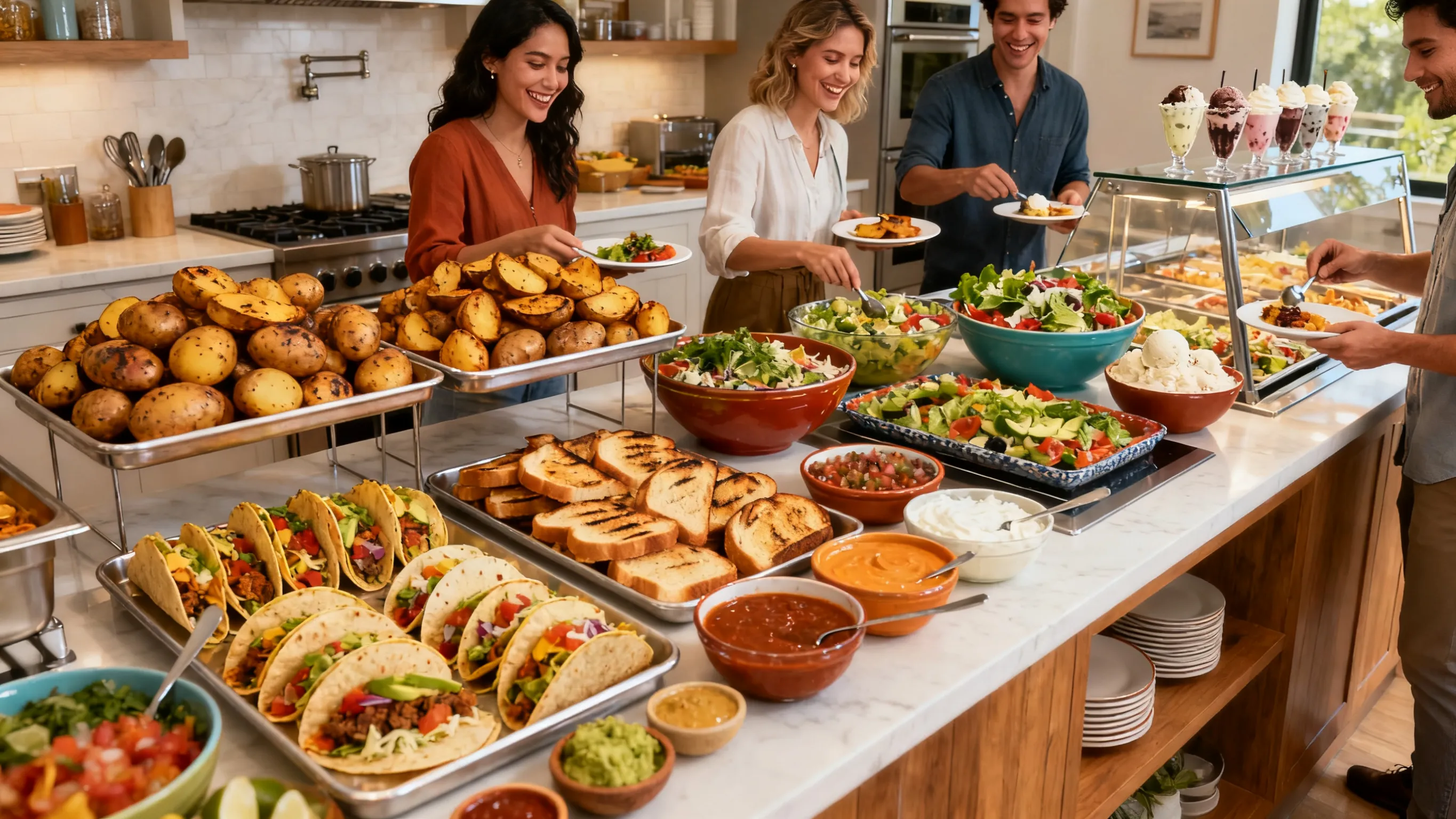
Her menu planning followed the same principle. Instead of attempting elaborate dishes that demanded constant attention, she focused on a few crowd-pleasers—recipes she knew by heart. Perhaps it was her famous rosemary-roasted potatoes or a simple, slow-cooked stew. She’d prepare what she could in advance, embracing make-ahead strategies that freed her to engage with guests. Studies, including those cited by the American Psychological Association, note that pre-planning and delegation significantly reduce holiday stress. My mom didn’t need the data; she lived it.
The Art of “Good Enough”
Perfectionism, as some psychologists argue, can be a significant barrier to well-being. My mom seemed to grasp this intuitively. She embraced what author Brené Brown calls the “gifts of imperfection.” If a pie crust cracked or a guest arrived unexpectedly, she’d laugh it off. “Life isn’t a magazine spread,” she’d remind us. “It’s a collection of real moments.” This mindset not only lowered her stress but gave everyone permission to relax. Guests felt comfortable, not judged—a key ingredient for genuine connection.
I recall a Christmas Eve when a snowstorm delayed half the family. Instead of fretting over the disrupted schedule, my mom lit extra candles, put on a vinyl record, and served hot cocoa with peppermint sticks. We sat by the fire, telling stories until the others arrived, wind-blown and exhilarated. That evening, the “imperfection” of the storm gifted us an unexpected, intimate prelude to the main celebration.
Rituals Over Rigidity
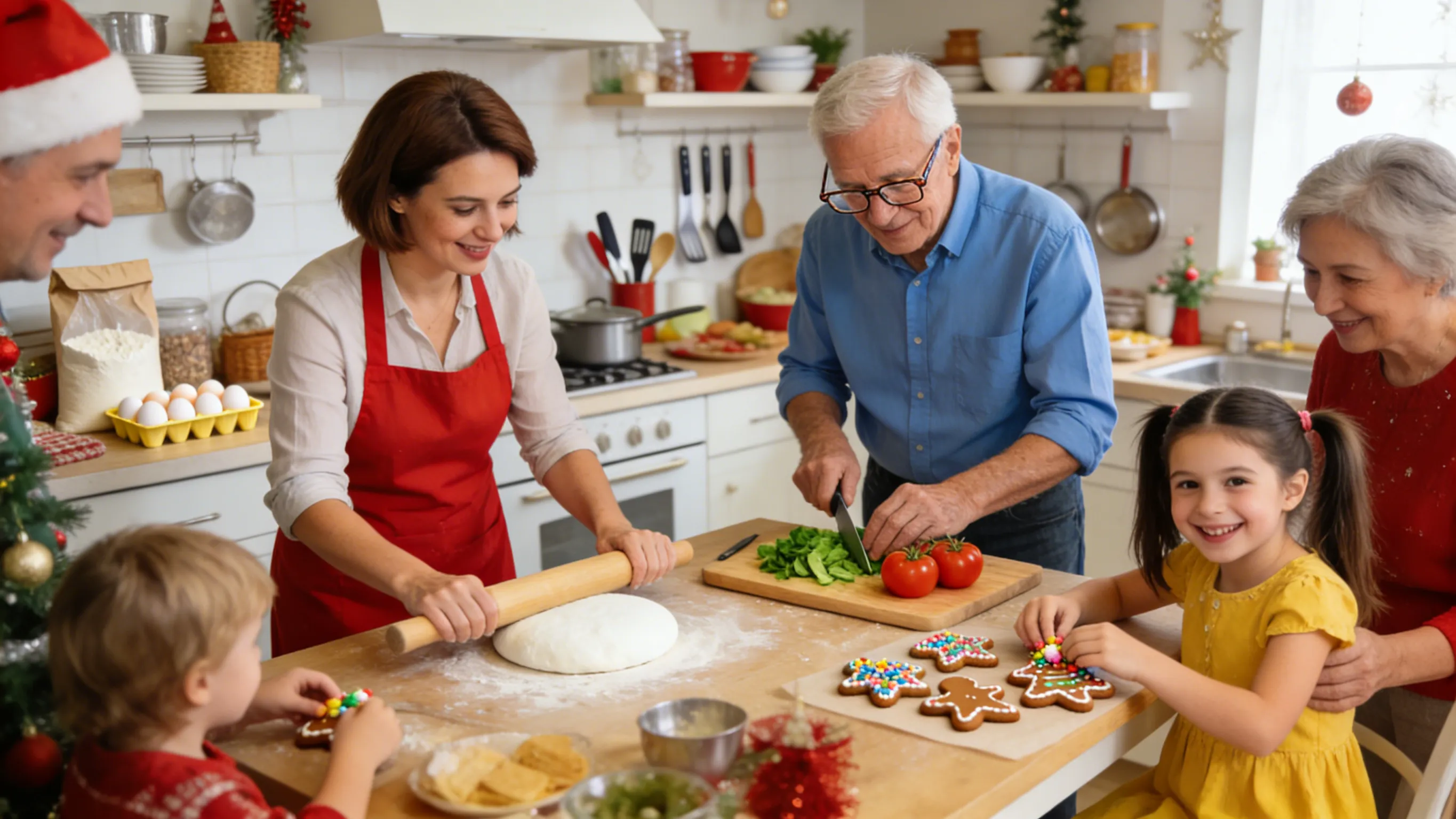
While my mom valued simplicity, she never sacrificed meaning. Rituals were her secret weapon—small, consistent traditions that anchored our holidays in warmth and predictability. For instance, every year, she’d involve us in making her grandmother’s cinnamon-orange ornaments. The process was messy, the results imperfect, but the scent of citrus and spice became synonymous with holiday cheer. These rituals, according to family therapist Dr. Jane Adams, create “emotional safety and continuity,” especially important in turbulent times.
She also personalized these rituals to include guests. A new friend might be invited to light a candle or share a favorite memory. This inclusive approach made everyone feel part of something larger than themselves. It wasn’t about executing a flawless plan; it was about co-creating an experience. As anthropologist Margaret Mead once noted, “Every time we remember to thank someone, or include someone, we reinforce the fabric of community.” My mom’s hosting was a living example of this.
The Gift of Presence
Ultimately, my mom’s genius lay in her ability to be present. While others raced through their parties like event managers, she sat. She listened. She lingered over coffee and asked real questions. Her focus was on connection, not curation. Neurological studies, such as those highlighted by the Mind & Life Institute, indicate that mindful presence can reduce anxiety and enhance relational satisfaction. For my mom, this wasn’t science—it was sense.
One Easter, I watched her abandon a half-set table to join kids hunting for eggs in the garden. Her laughter echoed across the lawn, and in that moment, I understood: the best hosts aren’t those who execute everything perfectly, but those who participate fully. The meal started late, the table was haphazard, but no one minded. We were all too busy living the holiday, not just hosting it.
Carrying the Torch Forward
Now, as I host my own gatherings, I channel my mom’s philosophy. I prioritize people over presentations, presence over perfection. I’ve learned to delegate, to simplify, and to embrace the beautiful mess of real life. And the feedback I receive echoes what I felt growing up: “Your home feels so relaxed,” guests say. “I actually enjoyed myself.”
Perhaps the greatest lesson my mom taught me is that stress-free hosting isn’t about having all the answers. It’s about asking the right question: “How can we create space for joy?” By letting go of unrealistic expectations and focusing on what truly matters—connection, comfort, and shared experience—we can unlock holidays that rejuvenate rather than drain.
So this season, consider taking a page from my mom’s book. Simplify your menu. Embrace the imperfections. Create a ritual that means something to you. And above all, be present. Because the most memorable holidays aren’t those that look perfect in photos, but those that feel perfect in our hearts.