Creative
Holiday Hosting: Let Your Guests Be Part of the Culinary Journey

The scent of pine, the soft glow of candlelight, the murmur of conversation punctuated by laughter—these
are the sensory hallmarks of a holiday gathering. For many of us, hosting these events is a labor of
love, a cherished tradition. Yet, it’s also a role fraught with a peculiar, self-imposed pressure. We
envision a flawless tableau: a home that sparkles, a table that groans under the weight of a perfectly
executed feast, and guests who are effortlessly, perpetually enchanted. The host, in this fantasy, is a
serene orchestrator, gliding from kitchen to living room, a smile ever-present. The reality, as any
seasoned host knows, often involves a frantic last-minute scramble, a kitchen that looks like a culinary
war zone, and a nagging sense of having spent the entire party managing it rather than truly
enjoying it.
What if we reimagined the entire premise? What if, instead of being the sole architect of the
experience, we invited our guests into the creative process? This isn’t about lowering standards or
resorting to potluck chaos. It’s about a fundamental shift from performance to participation, from
spectacle to shared journey. The most memorable gatherings, research in social psychology suggests, are
often those characterized by “shared cooperative action,�?where a collective goal fosters bonding and
positive affect. The meal becomes not just an endpoint, but the vibrant, collaborative path we take to
get there.
The Tyranny of the Perfect Feast and the Case for Collaboration
The modern cult of culinary perfection, amplified by social media’s highlight reels, has done no favors
for the home host. We’re bombarded with images of impossibly intricate charcuterie boards and desserts
that belong in a museum. A 2022 study published in the Journal of Consumer Culture noted a
significant rise in “entertainment anxiety�?linked to the pressure to create “Instagram-worthy�?domestic
experiences. This anxiety can ironically strip the joy from the very traditions meant to foster
connection.
The antidote, perhaps, lies not in striving harder for solitary perfection, but in embracing a more
organic, inclusive model. As food anthropologist Dr. Anna K. Simmons observes in her work
The Social Table, “For millennia, the preparation of food was a communal, conversational
activity. The industrial age and the modern nuclear family pushed it into a private, often solitary,
chore. Reclaiming that communal space around the cutting board or the stove isn’t a regression; it’s a
recalibration towards a more psychologically fulfilling form of hospitality.�?/p>
Letting guests be part of the culinary journey dismantles the invisible wall between “host�?and
“audience.�?It transforms them from passive consumers into active contributors, invested in the outcome.
The focus shifts from “What will they think of my cooking?�?to “Look what we created
together.�?This shared endeavor naturally cultivates conversation, breaks the ice among guests who may
not know each other well, and creates a tapestry of inside jokes and shared memories that linger long
after the last dish is washed.
Blueprints for a Participatory Feast: From Concept to Plate
Implementing this philosophy requires a shift in planning, moving from a rigid script to a flexible
framework. The host’s role evolves from executive chef to creative director and facilitator.
1. The Strategic Invitation: Setting the Stage for Participation The tone is set from
the moment the invitation lands. Instead of a standard “Dinner at 7,�?consider a more evocative and
inclusive prompt. “Join us for an evening of crafting our winter solstice feast together—we’ll be
assembling hand-rolled pasta and simmering a communal ragù from scratch.�?Or, “We’re hosting a
‘Build-Your-Own-Hearth�?pie night. Bring your favorite fall filling idea, and we’ll provide the dough,
spices, and laughter.�?This immediately frames the event as a collaborative project, managing
expectations and sparking excitement. It also provides a gentle, optional avenue for contribution,
relieving guests of the potluck pressure to bring a fully finished, transportable dish.
2. Curated Stations: The Architecture of Interaction This is the practical heart of the
approach. Instead of a single, monolithic kitchen workspace, think in terms of interactive stations.
This structure is manageable, photogenic, and encourages mingling.
-
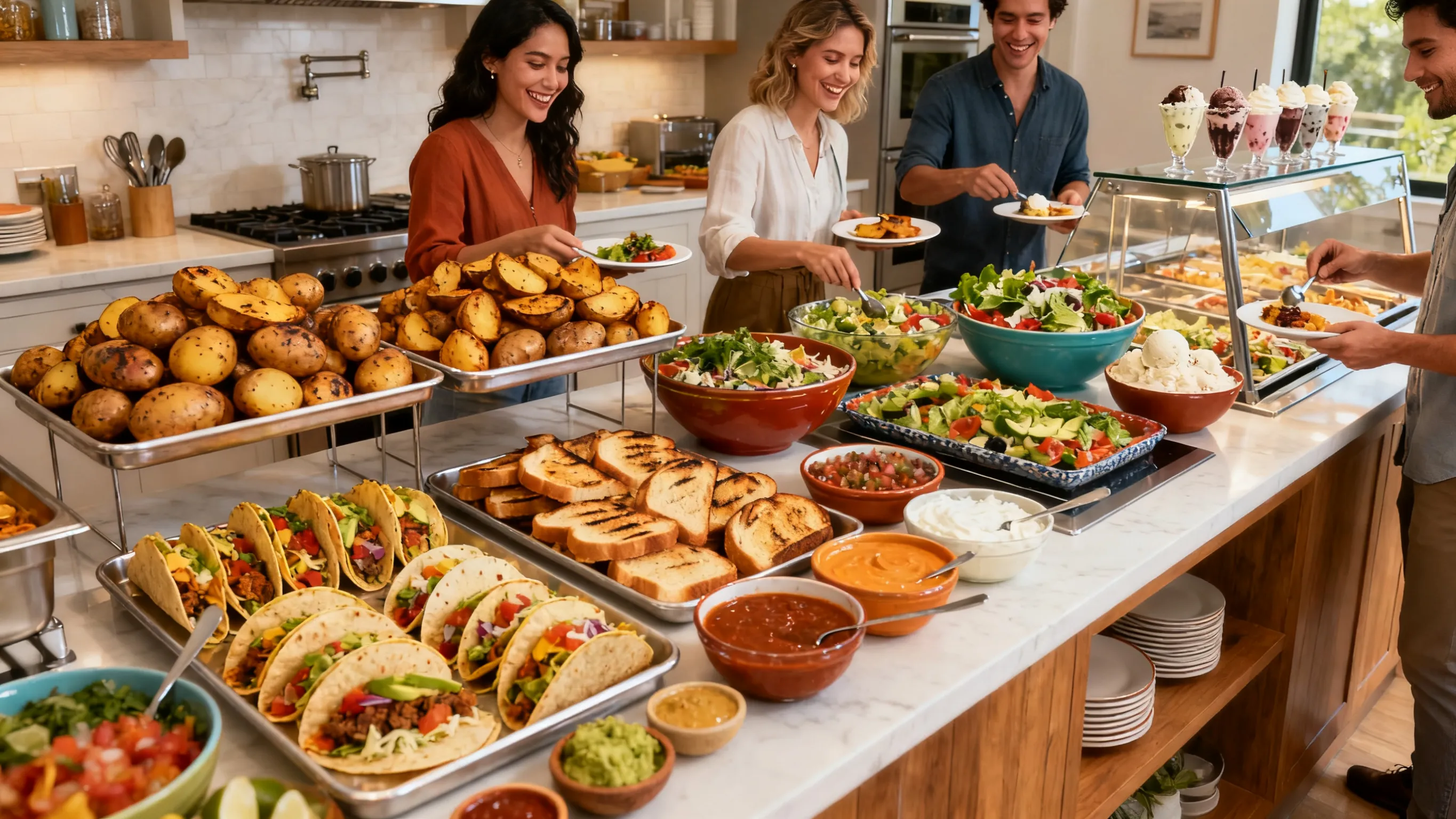
The Assembly Line: Ideal for dishes that are modular. A taco or bao bar is a classic
example, but think bigger. A raclette or fondue station is inherently interactive and
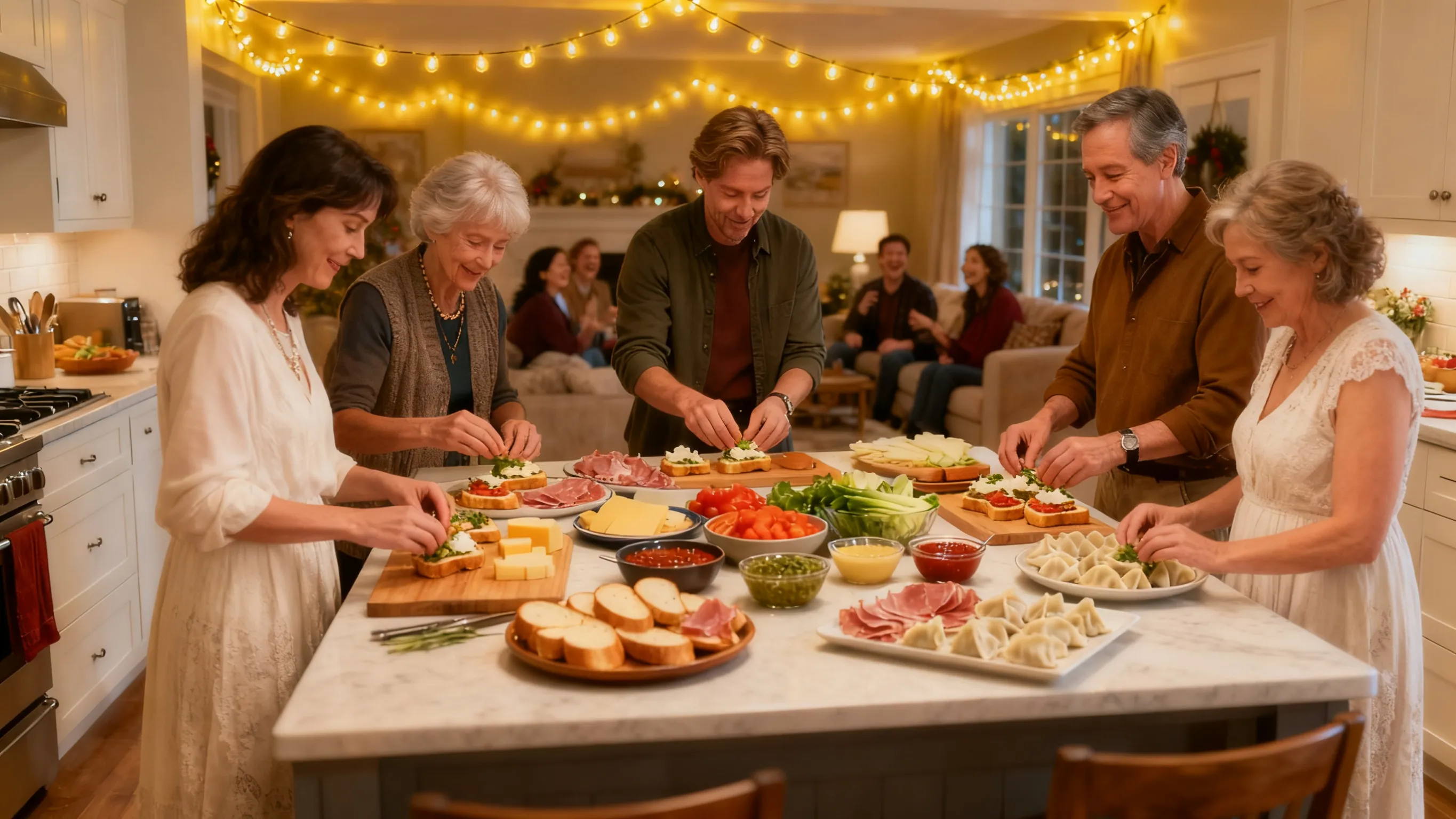
convivial. For Christmas, a “trim-the-tree�?crostini station with an array of spreads (from chicken
liver pâté to whipped feta with honey), toppings (caramelized onions, pomegranate arils, crispy
prosciutto), and herbs allows for endless creativity. I recall one New Year’s Eve where a simple
“Oyster & Mignonette Lab�?station—with guests shucking (under careful guidance), experimenting
with different vinegars and shallots—became the buzzing centerpiece of the evening for nearly an hour.
-
The Finishing Touch Station: Delegate the final, ceremonial acts. Set up a station
where guests can garnish the main soup with their choice of crisped sage, crème fraîche, or toasted
seeds. Let them be the ones to brulee the sugar on the crème brûlée with a kitchen torch (under
supervision, of course), their faces lit by the blue flame. There’s a profound, simple pleasure in
being handed the mortar and pestle to crack the peppercorns over a finished pasta dish just before
serving.
-
The Libation Laboratory: Move beyond a simple bar. Provide the base elements for a
signature cocktail or mocktail and let guests personalize. A large pitcher of a pre-mixed Negroni, for
instance, with an array of botanical garnishes—rosemary, grapefruit peel, a star anise—allows for
personal expression. For a non-alcoholic option, a sparkling cider or tea base with muddling stations
for ginger, herbs, and seasonal fruit invites experimentation.
3. The Host as Facilitator: Guidance, Not Control Your job is to prep the foundation
and then guide the experience. This means doing the unglamorous mise en place beforehand:
chopping the mirepoix for the soup, pre-making the dough, roasting the bones for stock. Have all
ingredients pre-measured in little bowls, tools laid out. Create simple, elegant recipe cards for each
station as a guide, not a commandment.
Circulate, but don’t hover. Offer gentle tips—“I find a pinch of flaky salt on that really makes the
chocolate pop”—or share a brief story about an ingredient. “This smoked paprika is from a tiny market in
Budapest; the vendor told me his family has been producing it the same way for three generations.�?These
small narratives weave richness into the process. Be prepared to embrace happy accidents. A spilled
glass of wine into the stew might just become the legendary �?023 Burgundy Reduction Incident�?that
defines the evening.
The Ripple Effects: Beyond the Meal
The benefits of this model extend far beyond a delicious dinner. Psychologically, it mitigates guest
anxiety. For the introvert or the person who doesn’t know anyone, having a defined, low-stakes
task—rolling meatballs, arranging a cheese board—provides a social anchor and a sense of purpose. It’s a
conversation starter that isn’t about the weather.
It also democratizes the culinary narrative. In a multi-cultural gathering, inviting guests to
contribute a technique or flavor from their heritage can be profoundly meaningful. It turns the meal
into a living dialogue of traditions. One friend, whose husband is from Lebanon, always brings her
family’s blend of za’atar. Letting her teach a small group how to blend the thyme, sumac, and
sesame seeds, and then drizzle it over flatbread with olive oil, created a moment of cultural exchange
more potent than any lecture.
Furthermore, it’s a subtle lesson in mindfulness and slowing down. In a world of instant gratification,
the act of patiently folding dumplings or kneading dough becomes a meditative, collective ritual. The
delayed gratification of eating something you saw through from raw ingredients to finished plate deepens
the appreciation, a principle long understood by educators and psychologists.
Addressing the Hesitations: Practicality and Polish
Some may worry: “But won’t my kitchen become a crowded mess?�?Or, “I love cooking; won’t I miss doing it
all myself?�?These are valid concerns.
The key is in the preparatory work and station design. A well-organized station with clear instructions
and the necessary tools (and a small trash bowl) minimizes chaos. Designate a “finishing�?area away from
the active stations for plated dishes to await serving. As for missing the solo act, reframe it. You’re
not giving up cooking; you’re gaining co-creators. You exchange total control for the unpredictable
magic of collaboration. The pride you feel is different—it’s the pride of a conductor whose orchestra is
playing in beautiful, improvised harmony.
And what of the desire for elegance? Participation need not be messy or casual. In fact, it can elevate
the aesthetic. Imagine a beautifully arranged charcuterie board where guests are invited to
compose their own plates with provided silver tongs. Or a dessert station with delicate, pre-baked
pastry shells and an array of piping bags filled with different creams and curds. The resulting
individual creations are often more visually interesting than a uniform cake.
A New Tradition for a New Era
Ultimately, holiday hosting in this participatory mode is a response to our times. After periods of
isolation, we crave genuine, tactile connection more than passive consumption. We yearn for experiences
that feel authentic and human, not curated and distant. Letting guests into the culinary journey honors
that yearning.
It acknowledges that the true magic of the holidays isn’t frozen in a picture-perfect moment, but flows
through the entire process—the shared laughter over a misshapen cookie, the collective “ahh�?as a shared
dish is unveiled, the quiet satisfaction of working side-by-side with loved ones toward a common,
delicious goal.
So this season, consider laying down the mantle of the solitary maestro. Open the kitchen doors, both
literal and metaphorical. Provide the canvas, the colors, and the gentle guidance, then invite your
guests to paint the feast with you. You may just find that the most cherished gift isn’t the one under
the tree, but the messy, joyful, collaborative journey you took to gather around it. The meal you share
will taste not just of salt, fat, acid, and heat, but of something far more profound: shared humanity,
co-creation, and the deep, resonant flavor of true togetherness.