Creative
Material Matters: Innovations and Sustainable Choices in Home Building

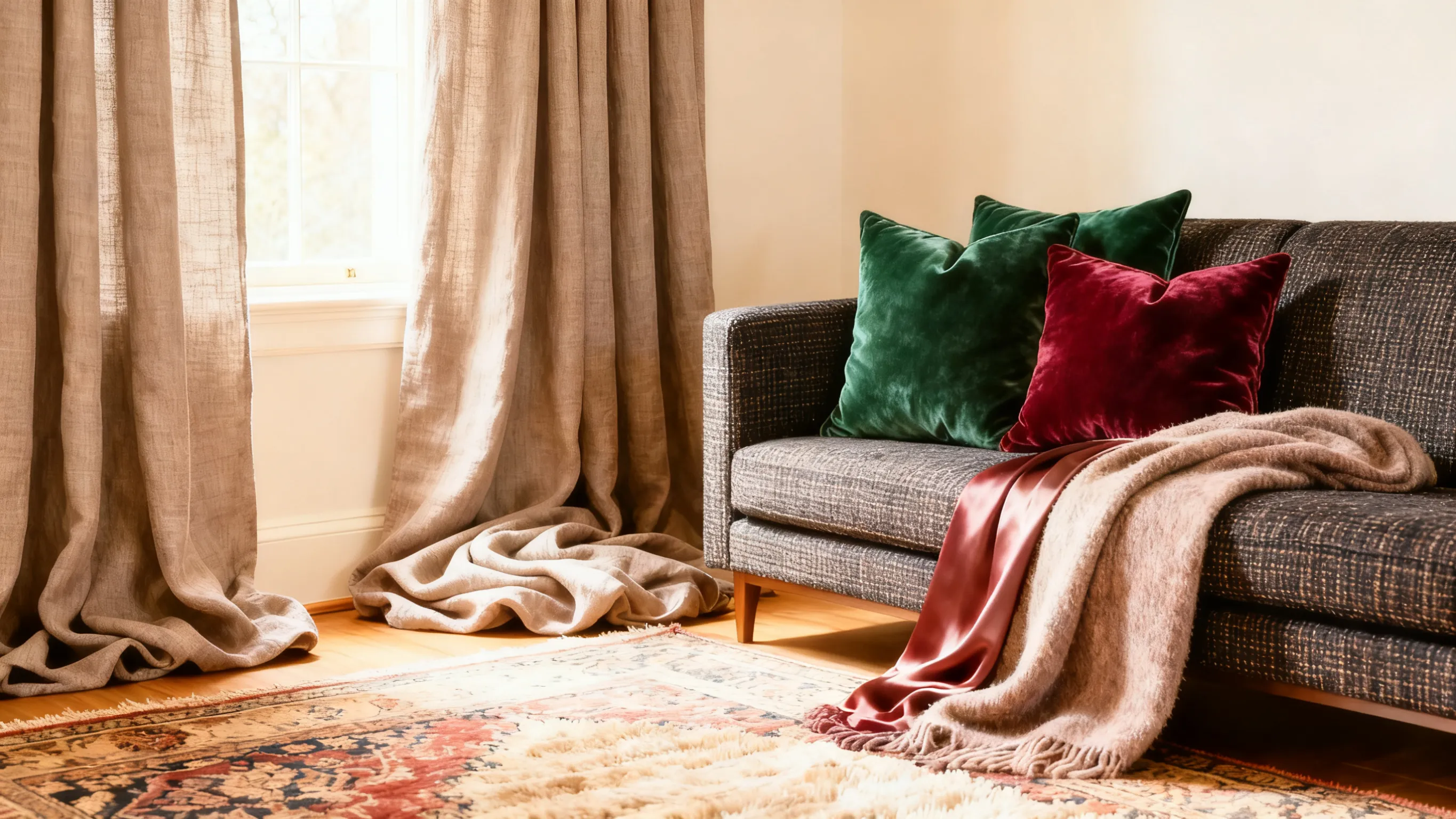
The scent of freshly cut wood, the cool, solid feel of polished stone underfoot, the soft, inviting texture of a wool throw on a sofa—these are the sensory signatures of a home. For centuries, the materials we’ve chosen to surround ourselves with have defined not just the aesthetics of our shelters but their very soul and story. Today, that story is being rewritten. It’s no longer just about beauty or durability; it’s a narrative deeply intertwined with responsibility, innovation, and a quiet revolution in how we conceive of “home.” The choices we make in home building materials have cascading effects, rippling out from our living rooms to global supply chains and back again to the air we breathe indoors. This is the new frontier of domestic life: where material matters, profoundly.
The Weight of Legacy: Why Our Old Choices No Longer Fit
Let’s begin with a confession. For decades, the dominant paradigm in mainstream construction was one of efficiency and cost, often at the expense of everything else. The post-war boom gave us drywall, vinyl siding, and laminate countertops—materials that promised speed, uniformity, and affordability. And they delivered. They housed millions. But as researcher Dr. Anika Sharma of the Built Environment Health Lab often notes, “We are now living in the long-term experiment of those choices.” The experiment’s results are in, and they are sobering.
Consider the humble carpet. A 2022 report by the Environmental Protection Agency highlighted that standard synthetic carpets can off-gas volatile organic compounds (VOCs) like formaldehyde and benzene for months, even years, after installation, contributing to indoor air quality that can be up to five times more polluted than outdoor air. Or take the ubiquitous extruded polystyrene (XPS) foam insulation, a champion of thermal resistance but manufactured using hydrofluorocarbon blowing agents with a global warming potential thousands of times that of CO2. We sealed our homes for energy efficiency, only to sometimes trap a cocktail of chemicals inside.
The environmental toll extends beyond our walls. The cement industry alone is responsible for approximately 8% of global carbon dioxide emissions. The relentless extraction of virgin sand for concrete is depleting riverbeds and coastlines, causing ecological damage and social conflict. As architect and material pioneer David Benjamin puts it, “We’ve been building the world as if materials are infinite and consequences are someone else’s problem. That fiction is collapsing.”
This legacy has bred a quiet anxiety in homeowners. It’s the unspoken question when you walk into a newly renovated space that smells “new”: What exactly am I breathing? It’s the guilt that flickers when you replace a perfectly functional, but dated, laminate countertop, sending a slab of petrochemical-derived material to the landfill. This dissonance—between the desire for a beautiful, comfortable home and the unease about its hidden costs—is the catalyst for change.
The Innovation Frontier: Where Science Meets the Hearth
Stepping into this breach is a wave of material innovation that feels less like industrial design and more like alchemy. Scientists, designers, and startups are looking to the past, to nature, and to waste streams for inspiration, creating materials that are not just less bad, but regenerative.
One of the most exciting areas is carbon-negative building materials. Companies like BioMason are “growing” bricks and tiles using microorganisms, a process that occurs at ambient temperatures, sequestering carbon in the process instead of releasing it. Similarly, Hemcrete, a biocomposite made from hemp hurds (the woody core of the plant) and a lime-based binder, is gaining traction. As hemp grows, it absorbs CO2 at an impressive rate, and the final product continues to sequester carbon for the life of the building. It provides excellent insulation and moisture regulation, creating a breathable, healthy wall system. A study from the University of Bath found that a hemp-lime wall could lock away more than 100 kg of CO2 per cubic meter.
Then there’s the movement to turn waste into wealth. Mycelium, the root structure of fungi, is being trained to grow around agricultural waste like corn stalks or sawdust, forming strong, lightweight, and fully compostable panels for insulation and acoustic tiles. Companies like Ecovative Design are leading this field. Meanwhile, in Italy, companies are producing stunning terrazzo-style slabs and surfaces from recycled glass and porcelain from old sinks and toilets. As designer Ilaria Mazzoleni observes, “Waste is just a material in the wrong place. Our job is to find it a new home, with dignity.”
Perhaps the most relatable innovations are those that bring nature’s intelligence indoors. Phase-change materials (PCs), often derived from plant oils, are being integrated into wallboards and plaster. They absorb excess heat during the day, melting slightly, and release it at night as they solidify, passively regulating indoor temperatures. It’s a high-tech return to the thermal mass principles of ancient adobe or stone houses.
These aren’t just laboratory curiosities. You can now specify mycelium acoustic panels for your home office, clad a feature wall in grown brick, or insulate your attic with hemp batts. The frontier is already here, waiting at the design table.
The Sustainable Choice Spectrum: From Radical to Reachable
For most homeowners, building a fully mycelium-grown house might be a step too far. The beauty of the current moment is that sustainable material choice is not a binary, all-or-nothing proposition. It’s a spectrum, and meaningful progress can be made at every point.
At the Radical End: This is for the pioneer. It involves materials like rammed earth or straw bale construction, where the walls are literally made from subsoil or compacted agricultural waste, plastered with natural clay. The aesthetic is profound, textural, and deeply connected to site. The thermal performance is exceptional. The embodied energy is almost zero. It requires a specialized builder and a willing mindset, but the result is a home that is fundamentally of its place.
In the Progressive Middle: This is where most of the innovation lives and is increasingly accessible. Here, you choose:
- Mass Timber: Cross-laminated timber (CLT) and glulam beams allow for constructing multi-story buildings out of wood. Wood sequesters carbon. A study published in Nature estimated that using wood in construction could reduce global CO2 emissions by 14-31%. The feel of a CLT ceiling—warm, visually textured, structurally honest—is unparalleled.
- Reclaimed & Recycled Content: This isn’t just about barnwood accent walls. It’s about structural beams salvaged from old factories, tiles made from 100% recycled glass, and countertops like PaperStone or Richlite, made from post-consumer paper and resins. It’s choosing insulation like denim batts made from recycled blue jeans.
- Natural Finishes: Moving away from synthetic paints and varnishes to clay plasters, limewash, and plant-based oil finishes. These materials are vapor-permeable, regulating humidity and eliminating off-gassing. They develop a beautiful, patinaed depth over time. As artisan plasterer Marco Lavit says, “A clay wall is alive. It listens to the home and responds.”
At the Accessible Starting Point: This is where every single renovation or purchase can begin. It’s about informed selection:
- Choosing FSC-Certified Wood: Ensuring your new flooring or cabinetry comes from responsibly managed forests.
- Opting for Low-VOC Everything: From paint and adhesive to caulk and sealant. Look for certifications like GREENGUARD Gold.
- Prioritizing Durability and Timelessness: The most sustainable material is the one you never have to replace. Choosing a timeless, high-quality tile over a trendy, cheap laminate is a sustainable act.
- Supporting Transparency: Favoring manufacturers who offer Environmental Product Declarations (EPDs)—nutrition labels for building products that detail their environmental impact from cradle to grave.
The Human Element: Craft, Story, and Sensory Connection
Beyond spreadsheets of carbon sequestration and VOC levels, there is an intangible, deeply human element to this material shift. Sustainable, innovative materials often come with a story, and they almost always engage the senses in a way their generic counterparts do not.
I recall visiting a home in Vermont where the owner had used locally sourced slate for the hearth and bathroom. It wasn’t the uniform, jet-black slate you see in catalogs. It was variegated with rusty reds and sea greens, fossils visible on the surface. The mason had to work with each irregular piece. “Every slab has a memory of this place,” the homeowner told me, running her hand over a fossilized ripple mark. “It doesn’t feel imported. It feels revealed.”
This connection to craft and locality is a antidote to the alienation of globalized, anonymous supply chains. When you specify a lime plaster from a regional producer, or a dining table from a maker using wood from a urban tree salvage program, you’re not just buying a product; you’re participating in an economy of care and skill. The slight imperfections, the trace of the maker’s hand, the knowledge of origin—these qualities imbue a space with warmth and authenticity that no perfect, mass-produced item can replicate.
The sensory payoff is real. A floor of reclaimed oak, worn smooth by generations, feels different under bare feet than a laminate print of oak. A wall of breathable clay plaster subtly modulates the humidity in a room, making the air feel fresher. The acoustics in a space with soft, fibrous insulation like hemp or wood fiber are noticeably quieter, more serene. These are not luxuries; they are fundamental components of well-being, slowly recalibrating our nervous systems to environments that are nurturing rather than demanding.
Navigating the New Landscape: A Practical Guide for the Conscious Homeowner
So, how does one navigate this new, exciting, but sometimes overwhelming landscape? The path forward is part research, part partnership.
- Reframe the Question: Start not with “What style do I want?” but with “How do I want this space to feel and function?” and “What are my values?” Is your priority indoor air health for a family with allergies? Thermal resilience for energy bills? Supporting circular economies? Your values will guide your material matrix.
- Embrace Life Cycle Thinking: Ask not just what a material costs at the checkout, but what it costs the planet and your health over its entire life—from extraction, to manufacture, to installation, to its end of life. A slightly more expensive material that lasts 50 years and can be recycled is cheaper and more sustainable than a cheap one replaced every decade.
- Find the Right Partners: Your architect, designer, or builder is your most critical ally. Seek out professionals who are fluent in this new language of materials. Ask them about their experience with mass timber, their go-to sources for low-VOC products, or if they’ve ever worked with a natural plasterer. Their enthusiasm (or lack thereof) will be telling.
- Start with a Pilot Project: You don’t need to build a new house. Renovate a bathroom using recycled glass tile and a vanity from reclaimed wood. Insulate your basement with wood fiber boards. Paint your bedroom with a clay-based paint. Live with the choice. Feel the difference. Let that experience inform your next, bigger decision.
- Accept Imperfection and Patina: This may be the hardest cultural shift. We are conditioned to value the pristine and the new. Sustainable materials often age, change color, and develop a character. A limewash wall will mellow. A copper sink will develop a verdigris patina. This isn’t deterioration; it’s a narrative unfolding on the surfaces of your home.
Conclusion: Building a Legacy, One Choice at a Time
The journey toward a home built with better materials is, ultimately, a journey back to intentionality. It is a conscious uncoupling from the disposable, the anonymous, and the toxic. It is a vote cast for a different kind of future—one where our shelters nurture us without degrading the world that holds them.
The innovations are thrilling, but the true power lies in the daily choices. It’s in the decision to repair the solid wood table instead of replacing it with a particleboard one. It’s in choosing a natural fiber rug over a plastic one. It’s in asking one more question, digging one layer deeper into a product’s story.
Our homes are our most intimate landscapes. The materials we fill them with shape our days, our health, and our sense of place in the world. They can be a source of passive harm or active healing. They can be a dead end in a linear economy of take-make-waste, or they can be part of a living, circular system. When we choose materials that matter—innovative, sustainable, healthy, and soulful—we are doing more than building a house. We are crafting a legacy of care, one thoughtful, beautiful, responsible choice at a time. The future of home isn’t a distant concept; it’s being laid, brick by grown brick, in the choices we make today.