Creative
Holiday Appetizers: Get Guests Involved in the Kitchen Fun

The scent of pine, the soft glow of string lights, the murmur of conversation from the living room—it’s
the soundtrack of the holiday season. For the host, however, this idyllic scene is often underpinned by
a frantic, solo performance in the kitchen. A performance where you’re the chef, the sous-chef, the
dishwasher, and the stage manager, all while trying to appear relaxed and festive. What if we reimagined
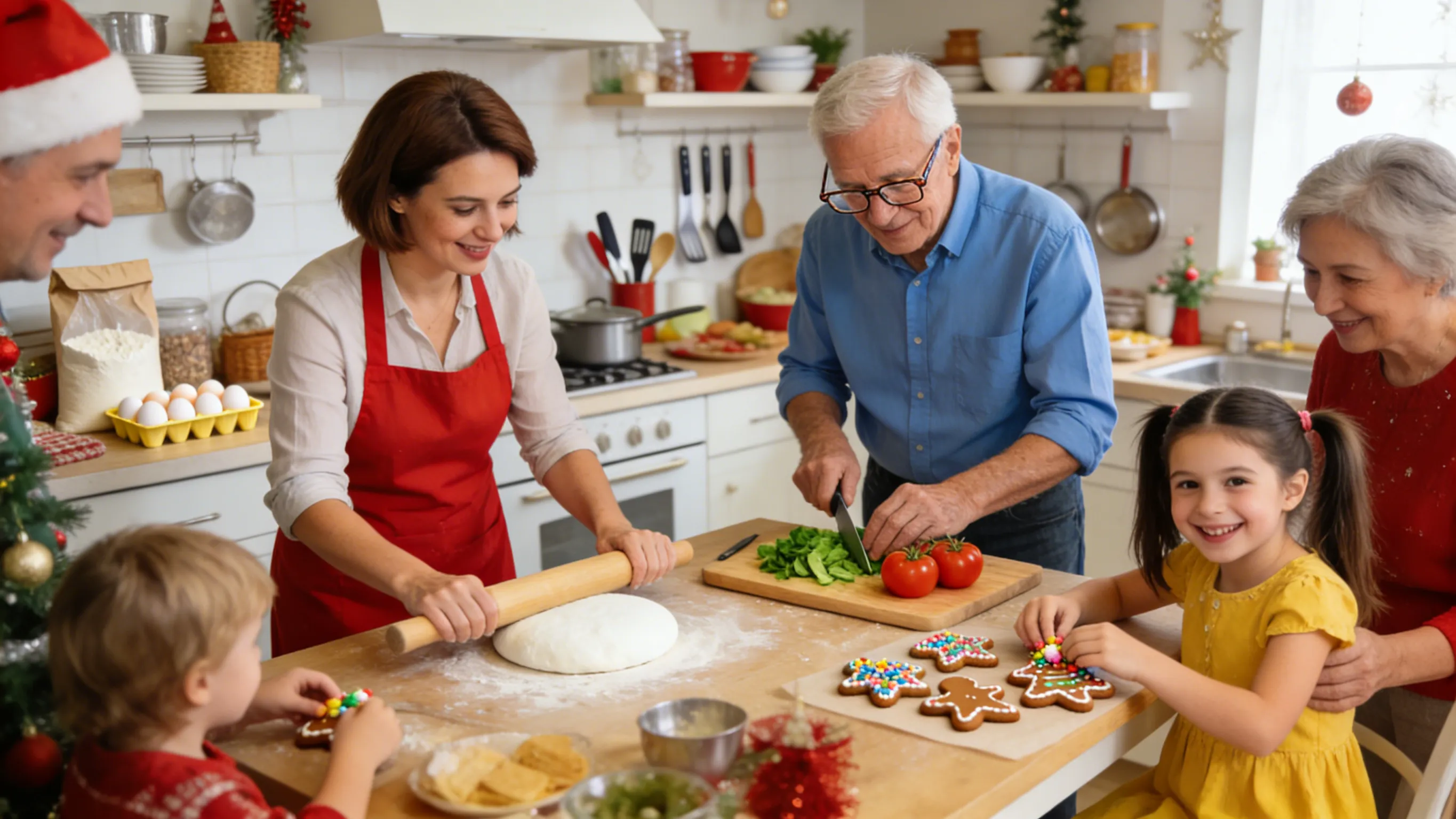
this script? What if, instead of a one-person show, the kitchen became the heart of the party, a
collaborative stage where the creation of holiday appetizers is the main event?
This isn’t about relinquishing control or compromising on quality. It’s about a strategic, joyful shift
that elevates the gathering from a passive consumption event to an active, shared experience. The
result? Livelier conversations, unforgettable memories, and, perhaps counterintuitively, a more relaxed
host. As food anthropologist Dr. Anna Harris notes in her study on communal cooking, "The act of
preparing food together is a profound social glue. It lowers barriers, encourages storytelling, and
transforms a meal from a service into a shared achievement." This holiday season, let’s explore how to
master the art of the collaborative kitchen.
The Case for Culinary Cohosting
We’ve all been there. You’ve spent days planning, shopping, and prepping. The doorbell rings, and as you
greet your guests with a smile, a part of your brain is calculating oven timers and worrying about the
phyllo dough thawing in the fridge. You float between rooms, never fully present anywhere. The irony is
palpable: you’ve worked tirelessly to create joy for others, yet you might be missing the joy itself.
The traditional model of hosting is, frankly, a bit outdated. It stems from a formal, almost theatrical
view of entertainment. But contemporary gatherings crave authenticity and connection. A 2023 report by
the Hospitality Trends Institute found that 68% of respondents aged 25-45 said their most memorable
holiday experiences involved "active participation" rather than "being served." They want to feel
involved, to contribute to the story of the evening.
Shifting to a participatory appetizer format directly addresses this desire. It solves practical
problems—distributing the workload, keeping guests entertained during the pre-dinner lull—while creating
deeper emotional rewards. The kitchen ceases to be a hidden, stressful workshop and becomes the home’s
vibrant nucleus. Laughter echoes off the tiles, fingers dusted with flour or spices, and the air fills
with the immediate, rewarding aroma of something cooking right now. This is where bonds are
fortified over a shared mission: building the perfect bruschetta or folding a dumpling.
Blueprint for a Flawless (and Fun) Collaborative Spread
Transforming your kitchen into a festive workshop requires a dash of planning and a generous pinch of
the right mindset. The goal is structured spontaneity.
1. Curate the "Menu Canvas": This is your most crucial task. The appetizer selection
must be invitingly simple, visually rewarding, and assembly-line friendly. Avoid anything that requires
precise knife skills or constant stove vigilance. Think deconstructed, build-your-own, or
one-step-finish items.
-
The DIY Station: This is the cornerstone. Set up a
Gourmet Crostini Bar. Provide a basket of sliced, toasted baguette. Offer bowls of
toppings: a rich chicken liver pâté, a vibrant sun-dried tomato and goat cheese spread, a simple
smashed avocado with lime. Include textural elements: crispy prosciutto, marinated artichoke hearts,
microgreens, flaky sea salt. Guests can craft their own flavor combinations.
-
The Interactive Cooker: Incorporate one hot item that guests can finish themselves. A
Mini Raclette Station is spectacularly fun and simple. As chef and author Heidi
Larsen of Foodie Crush advises, "Raclette is the ultimate social food. It’s slow, it’s melty,
and it forces people to gather around and chat while they wait for their perfect bite." Alternatively,
a Yakitori-Style Grill Plate over a portable burner, with pre-skewered shrimp,
scallops, and vegetables, lets guests grill to their preference.
-
The Assembly Line: Choose a dish that benefits from many hands.
Potsticker or Empanada Folding is perfect. Have the filling pre-made—a savory mix of
mushrooms and cabbage or spiced ground turkey. Lay out wrappers, small bowls of water for sealing, and
baking sheets. Demonstrate a simple fold, then let the production line begin. Imperfections are part
of the charm.
-
The No-Prep Required: For non-cooks or early arrivals, have a stunning
Charcuterie and Cheese Board already assembled. It acts as an anchor, something to
nibble on immediately, and a visual masterpiece that sets the tone. According to cheesemonger Juliana
González of Curds & Whey, "A great board tells a story. Mix textures and intensities—a
creamy brie, a sharp aged cheddar, a bold blue—and let the accompaniments (like quince paste,
whole-grain mustard, and honeycomb) be the conversation starters."
2. Stage Your Kitchen: Logistics are key. Clear ample counter space. Pre-measure
ingredients into attractive bowls. Have all necessary tools—spreaders, tongs, small plates,
napkins—within easy reach. Use chalkboard signs or elegant place cards to label toppings. Create
distinct "stations" to avoid traffic jams. The setup should whisper, "Come, play here."
3. Embrace the Role of Facilitator, Not Chef: Your job is to welcome guests into the
space, give a quick, encouraging tour of the options ("Here’s where the magic happens!"), and then�?let
go. Be available for questions, replenish supplies, but resist the urge to hover or correct. The
slightly misshapen dumpling made by your accountant friend will be the one he talks about for years.
Your value is in creating the framework for their creativity.
The Ripple Effects: More Than Just Food
When you invite guests into the kitchen, you’re serving something far more nourishing than canapés.
Breaking the Ice: For mixed groups where not everyone knows each other, a shared task
is the ultimate icebreaker. "Could you pass the paprika?" or "How did you get your fold so neat?" are
natural openings that lead to more substantive talk. The focus on a shared activity eases social anxiety
and creates instant common ground.
Crafting Lasting Memories: Years later, people won’t remember the exact taste of the
smoked salmon. They will remember the hilarious moment Uncle Bob tried to flip a scallop and sent it
skidding across the counter, or the quiet pride your niece took in arranging her perfectly symmetrical
crostini. These are the stories that become family lore, repeated at every subsequent gathering. You’re
not just making food; you’re making memory anchors.
The Unexpected Gift for the Host: This is the beautiful secret. By distributing the
culinary labor, you buy yourself the most precious holiday commodity: presence. You get to sip your
drink while it’s still cold. You can listen to your friend’s story without one ear tuned to the oven
timer. You become a participant in your own party, sharing in the laughter and the anticipation. The
exhaustion that usually comes after the last guest leaves is replaced by a warm, shared satisfaction.
Navigating the Potential Pitfalls
Of course, opening the kitchen doors requires a touch of diplomatic finesse. Not every guest will be a
born line cook.
For the hesitant, a gentle, specific invitation works wonders. Instead of a broad "Can you help?", try
"Sarah, I’ve heard you have an amazing palate—would you be my official taste-tester for this dip?" or
"John, I need a steady hand to arrange these on the platter—you’re hired!" Assigning a small, defined
role makes the entry point easy.
For the over-enthusiastic who might want to take over, a little gracious channeling is key. "I’m so glad
you’re here! You have such great energy. Would you be in charge of keeping the crostini basket full and
making sure everyone has a drink?" This gives them a leadership role that helps the party flow without
commandeering the menu.
And always, always have a backup. Perhaps a tray of oven-ready, pre-assembled bacon-wrapped dates sits
in the fridge. If the collaborative project ends up being more fun than fruitful, you have a delicious,
no-fuss safety net. The goal is zero stress, not culinary dogma.
This holiday season, consider an invitation that goes beyond "Come for dinner." Make it "Come and create
with us." Move the party into the kitchen, where the warmth of the oven is matched by the warmth of
collaboration. Unwrap the fancy platters, but also unwrap the bowls, the spoons, and the simple,
profound joy of making something together.
The most cherished holiday flavors are rarely just about salt, fat, and acid. They are a complex
reduction of laughter, shared effort, and the unique spice of human connection. So, set out the
ingredients, pour the drinks, and watch as your holiday gathering rises—quite literally—from the
collective efforts of the people you love most. The perfect appetizer, it turns out, isn’t a specific
recipe. It’s the experience of making it.