Creative
Boho Chic: From Pinterest Staple to Personalized Expression
Author:
Sarah Mitchell

In the ever-evolving landscape of interior design, few styles have captured the collective imagination
quite like Boho Chic. Once a niche aesthetic celebrated on platforms like Pinterest for its
free-spirited, layered visuals, it has matured into something far more profound: a deeply personal mode
of expression. No longer just a trend, Boho Chic now represents a philosophy—one that champions
individuality, sustainability, and the art of storytelling through decor. But how did this style
transition from a digital staple to a canvas for personal narratives? And what does it take to infuse
your home with its soulful essence without falling into cliché?
The Roots of a Movement
Boho Chic, or Bohemian style, traces its origins to the unconventional lifestyles of 19th-century
artists, writers, and intellectuals who rejected mainstream norms in favor of creative freedom.
Historically, it was less about aesthetics and more about a mindset—a rebellion against rigidity. Fast
forward to the early 2000s, and Boho Chic resurfaced, this time amplified by social media. Platforms
like Pinterest turned it into a visual phenomenon, with dreamy images of macramé wall hangings, rattan
furniture, and overflowing plants saturating feeds. Yet, as design writer Emma Wilson notes in her book
The New Bohemians, “What began as a trend has evolved into a movement centered on authenticity.
People aren’t just copying looks; they’re weaving their stories into their spaces.�?/p>
Indeed, the very elements that define Boho Chic—eclectic mixes, natural materials, and global
influences—lend themselves to personalization. But this shift from replication to interpretation marks a
critical turning point. As Wilson suggests, perhaps the style’s resurgence speaks to a broader cultural
yearning for meaning in an increasingly standardized world.
Breaking the Mold: Beyond the Pinterest Board
Walk into a home adorned in Boho Chic today, and you’ll notice something different from the curated
perfection of social media. Gone are the days of sterile replication. Instead, you’ll find spaces that
feel lived-in, layered, and unmistakably human. Take, for example, the story of Lena, a ceramic artist
from Lisbon. Her apartment is a testament to Boho Chic’s evolution: a vintage Turkish kilim passed down
from her grandmother sits beside mid-century modern chairs, while her own handmade pottery adorns
floating shelves. “My home isn’t about following rules,�?she explains. “It’s about surrounding myself
with objects that hold memories.�?/p>
This approach aligns with what some designers call “slow decor”—a deliberate, mindful process of
collecting and arranging items over time. Research from the Global Home Trends Institute highlights that
68% of millennials and Gen Z now prioritize sentimental value over brand names when decorating. It’s a
shift that challenges the fast-fashion mentality, urging us to ask not “Does this look good?�?but “Does
this feel like me?�?/p>
The Anatomy of Authenticity
So, what makes Boho Chic feel authentic rather than staged? The answer lies in its core principles,
which are as much about attitude as they are about aesthetics.
1. Eclectic Layering
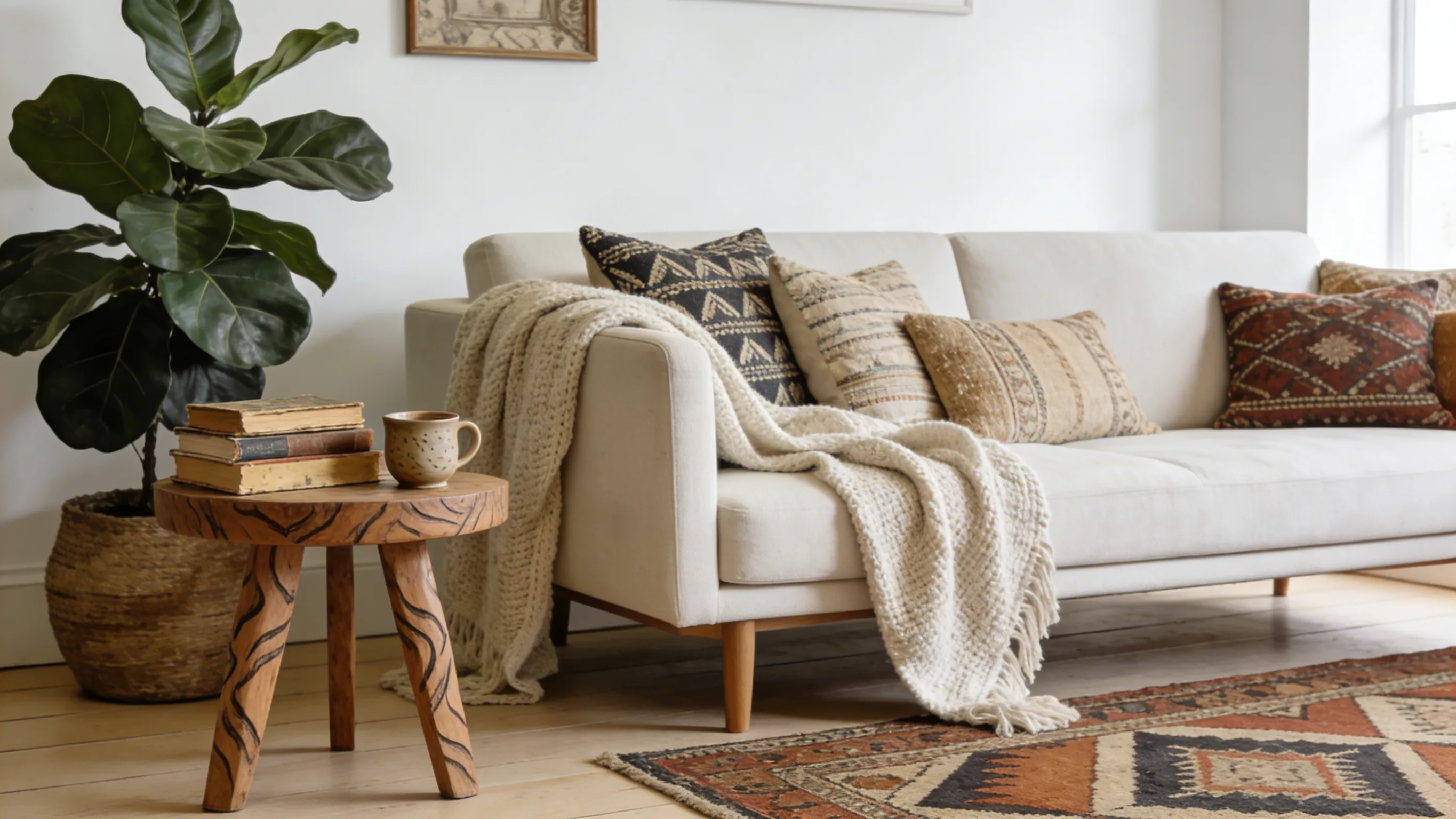
Unlike minimalist design, which thrives on restraint, Boho Chic embraces abundance. Think mismatched
textiles—a Moroccan rug layered over a jute floor covering, embroidered cushions piled atop a velvet
sofa. The key is balance. Too much clutter, and the space feels chaotic; too little, and it loses its
soul. As interior designer Marco Silva observes, “The magic happens in the tension between order and
spontaneity.�?/p>
2. Natural and Global Elements
From rattan and bamboo to terracotta and reclaimed wood, natural materials anchor Boho spaces in warmth
and texture. Meanwhile, globally inspired artifacts—be it Indian block-print curtains or African
mud-cloth pillows—add depth and cultural appreciation. However, experts caution against cultural
appropriation. “It’s one thing to draw inspiration; it’s another to reduce sacred symbols to
decor,�?says cultural historian Dr. Anika Patel. “The line is crossed when context is stripped
away.�?/p>
3. Biophilic Connections
Plants are the lifeblood of Boho Chic, and for good reason. Studies in environmental psychology, such as
those cited by the Journal of Environmental Psychology, indicate that incorporating greenery
can reduce stress and enhance creativity. But beyond the science, plants introduce an element of
unpredictability—a trailing pothos that refuses to be tamed, a fiddle-leaf fig that grows
asymmetrically. They remind us that beauty is imperfect and ever-changing.
4. Personal Artifacts
Perhaps the most defining feature of modern Boho Chic is the prominence of personal mementos: travel
souvenirs, family heirlooms, even children’s artwork framed alongside professional pieces. These items
transform a house into a home, each with its own story to tell.
The Sustainability Shift
Another reason for Boho Chic’s enduring appeal is its alignment with sustainable living. Thrifting,
upcycling, and supporting artisan crafts are not just stylistic choices but ethical ones. According to a
2022 report by the Sustainable Furnishings Council, the demand for vintage and handmade decor has surged
by 40% in the last five years. This isn’t just about reducing waste; it’s about valuing craftsmanship
and history.
Consider the rise of “slow fashion�?in interiors. Instead of buying mass-produced items, many are
turning to platforms like Etsy or local markets to source unique, handcrafted pieces. This not only
reduces environmental impact but also fosters a deeper connection to the objects we live with.
Navigating the Pitfalls
For all its virtues, Boho Chic is not without its challenges. The line between curated and cluttered can
be thin, and the risk of veering into cultural insensitivity is real. So, how does one avoid these
pitfalls?
-
Edit with Intention: Periodically reassess your space. Does each item serve a
purpose—whether functional or emotional? If not, it might be time to let it go.
-
Educate Yourself: When incorporating global elements, take the time to understand
their cultural significance. Support artisans directly when possible.
-
Embrace Imperfection: Boho Chic thrives on asymmetry and unpredictability. Let that
scratch on your vintage trunk tell a story; let your plants grow wild.
The Future of Boho Chic
As we look ahead, it’s clear that Boho Chic is here to stay—but not as a static trend. It’s evolving
into a more intentional, personalized expression of self. Some scholars, like Dr. Liam Foster of the
Design Innovation Lab, speculate that the next iteration may integrate smart home technology in subtle,
organic ways. Imagine voice-activated lighting that mimics the golden hour or planters with
self-watering systems disguised as terracotta pots. The possibilities are as boundless as the style
itself.
Yet, at its heart, Boho Chic will always be about more than decor. It’s a celebration of individuality,
a rejection of homogeneity, and an invitation to live authentically. As the saying goes, “Your home
should tell the story of who you are and be a collection of what you love.�?In a world that often
demands conformity, perhaps that’s the most rebellious act of all.
Crafting Your Narrative
So, where do you begin? Start small. Pick one item that speaks to you—a vintage mirror, a hand-woven
basket, a plant with personality—and build around it. Let your space evolve organically, reflecting your
journey, your passions, and your stories. After all, the truest form of Boho Chic isn’t found on a
Pinterest board; it’s lived in the layers of our daily lives.