Creative
Industrial Style for New Builds: What Designers Are Saying

The scent of freshly poured concrete, the cool touch of exposed steel, the rhythmic hum of a city waking up outside a floor-to-ceiling window—this is the sensory palette of industrial design. Once the exclusive domain of converted warehouses and gritty lofts, this aesthetic has undergone a quiet but profound evolution. Today, it’s not just about preserving the past; it’s being deliberately, thoughtfully woven into the fabric of new residential constructions. For modern homeowners and developers, the question is no longer if industrial style can work in a new build, but how to execute it with authenticity, warmth, and a forward-looking vision. We spoke with leading interior designers, architects, and material specialists to understand the current dialogue shaping this powerful design movement.
From Adaptive Reuse to Intentional Design: A Philosophical Shift
The industrial style’s origins are rooted in necessity and economy. In post-war cities like New York and London, artists and pioneers sought affordable, expansive spaces, finding them in abandoned factories. They celebrated the "found" elements: brick walls they didn’t build, ductwork they didn’t hide, timber beams scarred by a century of use. The style was an act of archaeological appreciation.
"The romance of adaptive reuse will always be central to industrial design's DNA," notes Maya Chen, principal of Studio Chen Architecture in Brooklyn. "But applying it to a new build requires a different mindset. It’s not about uncovering history; it’s about installing a philosophy. You’re choosing raw honesty over easy finish, material truth over superficial coating."
This intentionality is the key differentiator. In a new construction, every exposed pipe, every concrete panel, every steel beam is a conscious decision, not a happy accident. According to a 2023 report by the Global Interior Design Trends Observatory, searches for "new build industrial kitchen" and "modern industrial loft aesthetic" have increased by over 300% in the past five years, signaling a demand that transcends the availability of historic properties.
The New Industrial Toolkit: Materials with a Narrative
The core materials remain—concrete, steel, glass, brick, and reclaimed wood—but their application and sourcing have become more sophisticated.
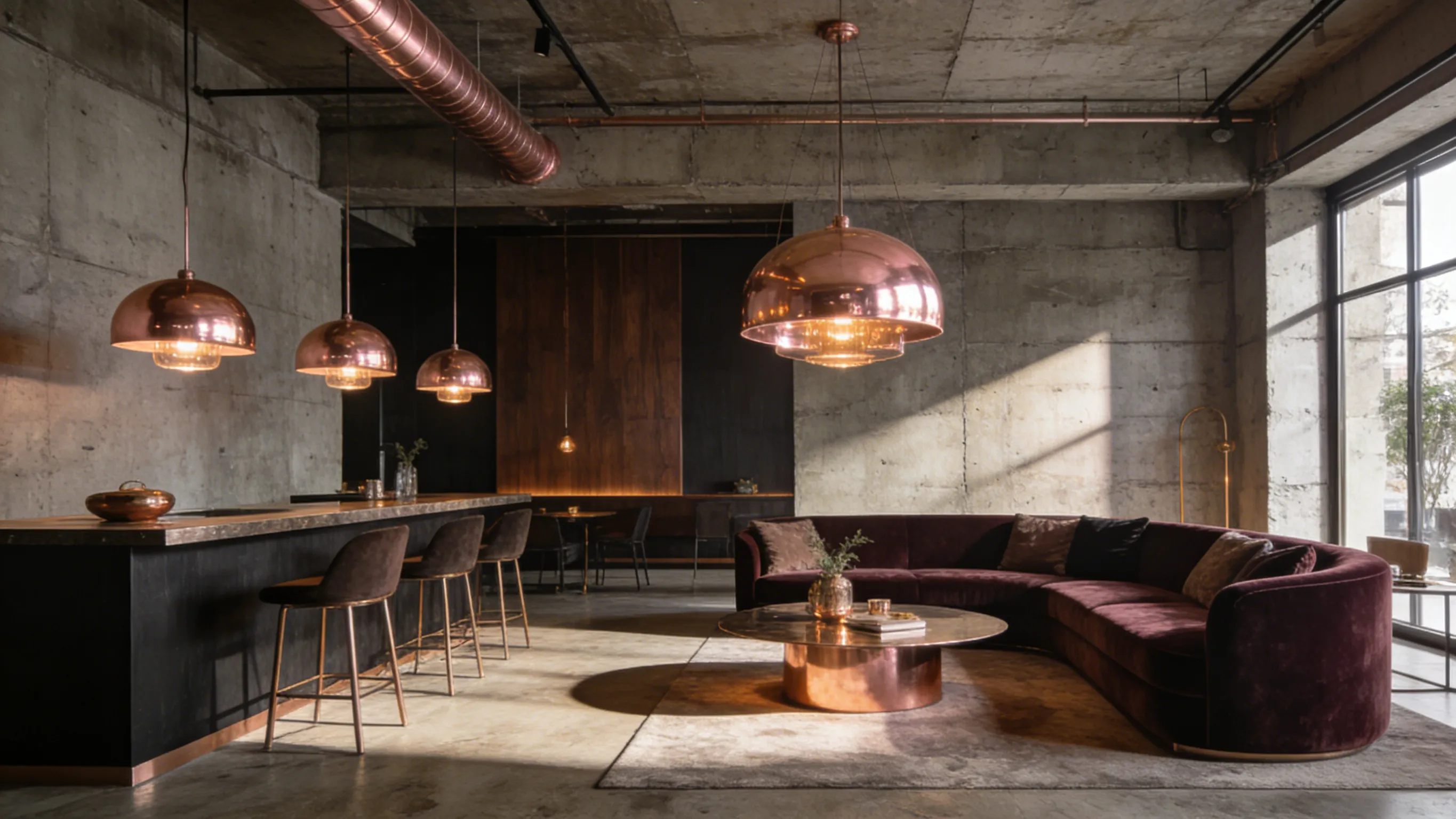
Concrete is no longer just for floors or brutalist walls. Pre-cast concrete panels with integrated texture or subtle pigmentation are being used for kitchen islands and fireplace surrounds. "We're specifying concrete with integral oxides for a soft, earthy hue—think warm grey or even a blush terracotta tone," says Liam Forsyth, a material consultant based in Copenhagen. "It counteracts the coldness people sometimes fear. We're also using it in thinner, more refined applications, like poured-in-place concrete countertops that feel sleek, not slab-like."
Steel has moved beyond structural I-beams. Laser-cut steel screens act as room dividers, offering privacy while playing with light and shadow. Blackened steel, achieved through chemical patination rather than paint, provides a rich, variegated finish for kitchen cabinetry and door frames. "It's about finding the artisan quality in an industrial material," Forsyth adds. "A hand-forged steel handle on a custom cabinet brings a human scale to the machine-made aesthetic."
The Brick Dilemma is a frequent topic among designers. In a new build, is a brick veneer wall "cheating"? The consensus is nuanced. "It depends on the execution," argues Marcus Thorne of Thorne Design Collective in London. "A thin, perfectly uniform brick slip can feel like a stage set. We often source bricks from demolition sites for their authentic variation and use them as a full, load-bearing skin where possible. The imperfections—the chips, the color shifts—are what tell the story. If that's not feasible, we look for modern, extruded bricks that have depth and character, and we insist on skilled bricklayers who can lay them in a traditional, slightly irregular pattern."
Reclaimed wood remains a non-negotiable for adding warmth, but its use is more curated. "We're moving away from barnwood on every wall," says Elena Rossi, an interior designer specializing in Milanese industrial lofts. "Instead, we might use a single, stunning reclaimed oak beam as a mantel, or employ wide-plank reclaimed flooring only in the main living area, creating a material 'rug' that grounds the space. The contrast with polished concrete elsewhere makes both materials sing."
The Humanizing Layer: Texture, Softness, and the "Unexpected" Element
This is where contemporary industrial design truly shines. The stereotype of a cold, sterile warehouse is dismantled by a deliberate infusion of softness and life.
Textural Warfare is a term Maya Chen uses. "It’s the strategic layering of opposites. Pair the hard, cool plane of a polished concrete floor with a vast, nubby wool area rug so deep your toes disappear. Hang heavy, linen drapes next to a pane of factory-style steel-framed glass. Place a sleek leather sofa against a rough, trowel-marked plaster wall. The friction between these textures is what creates depth and interest."
Biophilic Integration is no longer an afterthought. "Industrial spaces have the volume and light to become incredible gardens," notes Marcus Thorne. "We're designing integrated planters into raw concrete mezzanines, specifying vertical living walls made of steel mesh and cascading ferns, and using reclaimed timber shelving solely for collections of rare, architectural plants. The vibrant green against the monochrome backdrop is breathtaking."
The "One Wrong Note" principle, as Elena Rossi calls it, is crucial for avoiding a catalog-perfect, soulless look. "In every project, we introduce one element that seems to break the rules. It might be a curvaceous, velvet-upholstered Art Deco chair in a room of right angles. Or a collection of delicate, pastel-toned Murano glass vases on a raw steel shelf. This element creates surprise, reveals the homeowner's personality, and prevents the space from feeling like a theme."
Spatial Dynamics in New Constructions: Volume, Light, and Flow
New builds offer a blank slate to engineer the quintessential industrial feel: a sense of expansive, flowing volume.
The Double-Height Void is a powerful tool, but designers warn against using it gratuitously. "It must be earned and integrated," says Chen. "We use it to connect the social heart of the home—linking kitchen, dining, and living—often around a central fireplace or sculptural staircase. The upper volume isn't wasted; it becomes a gallery for art, a library ledge, or simply a reservoir for light and air."
Steel-Framed Glazing is the signature move for flooding spaces with light and blurring the line between inside and out. The trend, however, is toward slimmer, thermally broken profiles and larger, uninterrupted panes. "The goal is maximum glass, minimum frame," says Forsyth. "It’s a technical challenge, but the result—a sheer wall of light—is worth it. We're also using industrial-style steel doors internally, with full-height glazing, to separate rooms without sacrificing visual connection."
Open Plan, Defined Zones has evolved. The completely undifferentiated loft is giving way to a more nuanced approach. "We use changes in floor material, lowered ceiling planes over cozy seating areas, or freestanding, floor-to-ceiling steel shelving units to create implied rooms," explains Thorne. "The flow remains, but there's an intuitive sense of place—a 'library zone' defined by bookshelves and a different rug, a 'dining zone' marked by a cluster of pendant lights."
What Designers Are Cautioning Against: The Pitfalls of the Trend
With popularity comes dilution. The designers we spoke with shared their pet peeves and warnings.
The "Industrial Lite" Cliché: "Using a single Edison bulb hanging over a distressed wood table in an otherwise conventional suburban home," sighs Rossi. "It’s a token gesture. Industrial design is a holistic commitment to a material and spatial language, not a decorative accent."
Over-Reliance on Replica & Fast Furniture: The market is flooded with cheap, mass-produced "industrial" furniture. "A poorly welded, lightweight 'steel' table from a flat-pack store undermines the entire ethos," warns Forsyth. "Invest in fewer, real pieces. A solid iron base, a tabletop of solid timber or stone—these have weight and permanence that you feel."
Neglecting Acoustics and Comfort: High volumes, hard surfaces, and glass create an acoustic nightmare. "It’s the number one functional failure we see," says Chen. "We integrate acoustic plaster panels that look like raw concrete, specify extra-thick rugs with high-quality pads, and design fabric-wrapped ceiling baffles. Warmth is visual and auditory."
Ignoring the Building's Context: "Forcing a full-throttle Tribeca loft aesthetic into a new build in a rural English village can feel alien," notes Thorne. "The most successful projects draw inspiration from local industrial heritage—maybe using local slate instead of concrete, or referencing the form of nearby agricultural buildings. It’s about creating a dialogue with place."
The Future-Forward Industrial Home
So, where is the style headed? The conversation points toward sustainability and smart integration.
Carbon-Conscious Materials: "The next frontier is low-carbon concrete mixes, recycled steel, and sustainably harvested timber that is left in its natural state, not stained black," predicts Forsyth. "The industrial aesthetic is inherently anti-waste; it celebrates the material. Now, we're applying that to the material's lifecycle."
Seamless Technology: The ultimate challenge is integrating smart home technology without compromising the raw aesthetic. "We're concealing speakers within plaster, using underfloor heating to eliminate the need for visible radiators, and designing discreet charging stations into furniture," says Rossi. "The technology serves the life within the space without becoming a visual pollutant."
The industrial style for new builds, in the end, is a testament to a desire for authenticity in an increasingly polished and virtual world. It’s a choice for homes that feel grounded, honest, and resilient. It’s not a mere style but a stance—a declaration that beauty resides in structure, in material, in the graceful interplay of the robust and the refined. As Maya Chen concludes, "We're not building factories to live in. We're building homes that have the soul, strength, and soaring spirit of the industrial age, reimagined for how we want to live now. It’s about building a legacy, not just a look."
For those embarking on this path, the advice from the front lines is clear: commit to the philosophy, invest in true materials, master the balance of hard and soft, and always, always leave room for the unexpected human touch. The new industrial home isn't a museum to the past; it's a robust, beautiful, and deeply personal framework for the future.