Creative
Awair Element: Monitoring Your Home’s Air Quality for Wellness

We spend, on average, approximately 90% of our time indoors. It’s a statistic often cited by
environmental health agencies, yet its profound implications for our daily wellness are frequently
overlooked. We meticulously curate our diets, invest in fitness trackers, and seek out mindfulness apps,
all in pursuit of health. But what about the very air we breathe for the vast majority of our lives? The
air inside our homes, offices, and schools is an invisible, often neglected, cornerstone of our
well-being. It’s here that devices like the Awair Element step in, transforming the abstract concept of
“air quality�?into a tangible, actionable part of our daily health regimen. This isn't just about a
gadget; it's about cultivating a deeper awareness of our personal environments.
The Unseen Landscape of Indoor Air
Before delving into the specifics of a monitor, it’s crucial to understand what we’re monitoring. Indoor
air is a complex cocktail, a dynamic mixture influenced by everything from our building materials and
cleaning products to our own activities and even the weather outside. Unlike the regulated pollutants of
the outdoor world, our indoor atmosphere is a private ecosystem.
Take volatile organic compounds (VOCs), for instance. These are gases emitted from a staggering array of
common household items. That “new�?smell from furniture, the scent of a fresh coat of paint, the fumes
from certain cleaning sprays, even some air fresheners—all can be sources. The U.S. Environmental
Protection Agency notes that concentrations of many VOCs can be consistently higher indoors (up to ten
times higher) than outdoors. While not all are harmful at typical levels, some, like formaldehyde, are
known irritants and potential long-term health risks.
Then there’s particulate matter (PM2.5), those microscopic particles so small they can travel deep into
the lungs and even enter the bloodstream. Indoors, they’re generated by cooking (especially frying or
sautéing), burning candles or incense, fireplaces, and simply moving around, which disturbs settled
dust. A study published in Environmental Health Perspectives suggested a strong link between
exposure to fine particulate matter and a range of cardiovascular and respiratory issues.
Carbon dioxide (CO2) is another silent player. We exhale it, and in poorly ventilated spaces, it can
accumulate rapidly. While not toxic at the levels found in homes, elevated CO2 (above 1000 parts per
million) is a direct proxy for ventilation quality. High levels are strongly correlated with drowsiness,
reduced cognitive function, and that unmistakable “stuffy�?feeling in a crowded room. As researcher
Joseph Allen of Harvard’s T.H. Chan School of Public Health has argued, “We have to stop thinking about
air quality as just an ‘environmental�?issue. It’s a building performance and human performance
issue.�?/p>
Humidity and temperature round out the core metrics. Too dry, and our skin and mucous membranes suffer,
potentially making us more susceptible to airborne viruses. Too humid, and we create a paradise for mold
mites and dust mites, major triggers for allergies and asthma. Finding that “Goldilocks zone�?is key to
comfort and health.
This is the invisible landscape the Awair Element is designed to map.
The Awair Element: A Design for Awareness
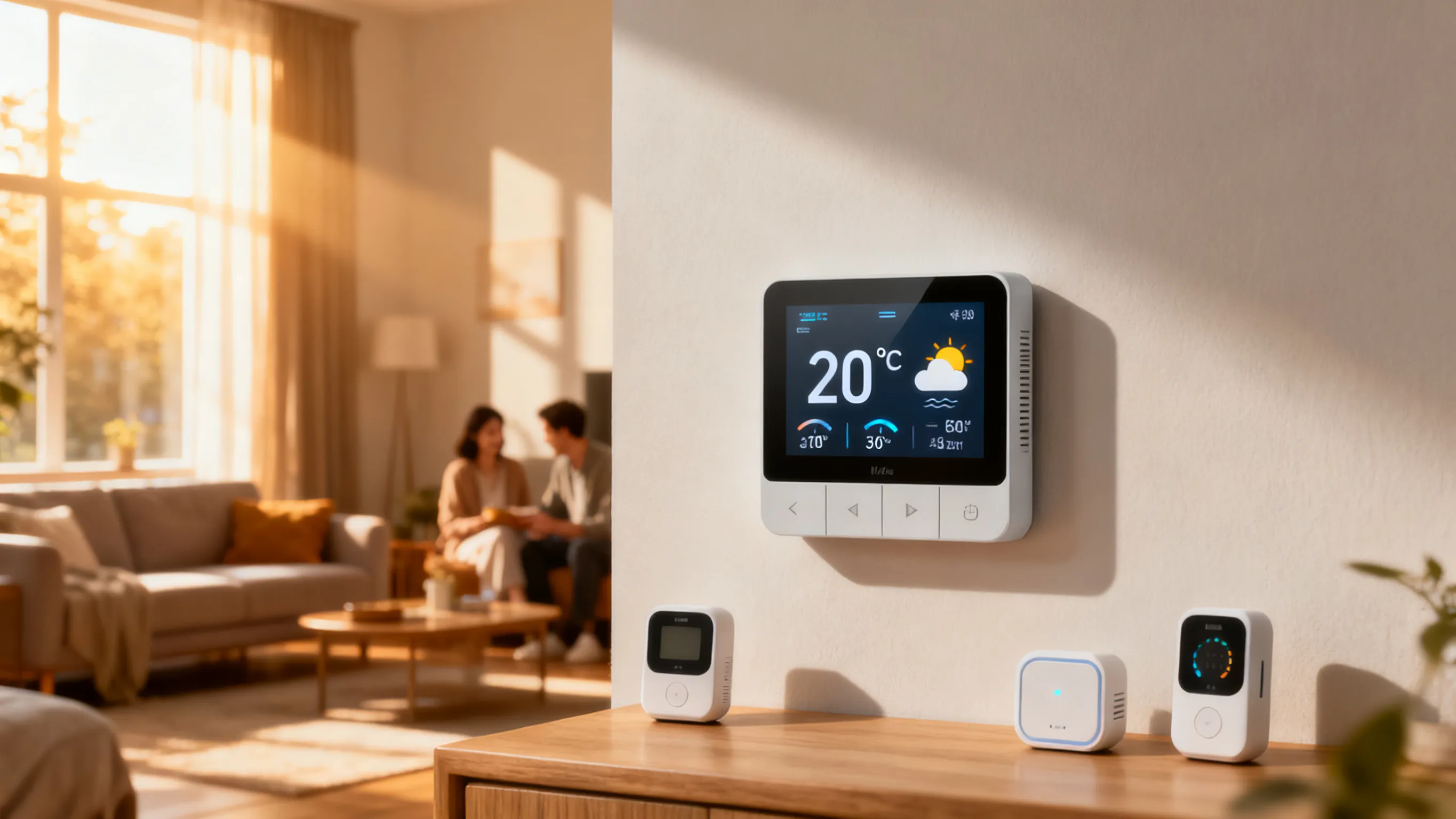
The Awair Element distinguishes itself in a growing field of air quality sensors through a deliberate
focus on clarity, design, and holistic wellness. It’s not a complex scientific instrument bristling with
ports and displays; it’s a discreet, well-designed object meant to belong in a living space. Roughly the
size of a small paperback book, its fabric-covered front and minimalist interface allow it to blend into
a bookshelf, bedside table, or office desk without shouting “tech gadget.�?/p>
Its core function is to track the five key parameters discussed: VOCs, PM2.5, CO2, humidity, and
temperature. Sensors for each work continuously, feeding data to the device’s simple LED display. This
display is the heart of its user experience. Instead of showing raw numbers (though those are accessible
via the app), it presents a single, color-coded score from 0 to 100—the Awair Score. Green is good,
yellow is fair, red is poor. This instant, glanceable feedback is powerful. You don’t need to be an
environmental scientist to understand that a red light means the air needs attention.
I recall placing my Awair Element on my home office desk for the first time. I had just finished a
vigorous session of tidying up, using a popular citrus-scented wood polish. Feeling productive, I sat
down to work. Within minutes, the Element’s display shifted from a calm green to a glaring orange, then
red. The culprit? A massive spike in VOCs from the polish. It was a visceral, immediate lesson. The
“clean�?smell I associated with a job well done was, from an air quality perspective, a pollutant event.
I opened a window, and within twenty minutes, watched the score climb back to green, a quiet affirmation
of the simple solution.
From Data to Action: The App and Ecosystem
The physical device is only half the story. The companion Awair app is where data transforms into
insight and action. Here, you can see the historical trends of each factor, understand what contributed
to changes in your overall score, and receive personalized tips.
The app might note, for example, that your PM2.5 levels peak every weekday around 7 PM. Cross-reference
that with your life, and you’ll likely find it’s when you’re cooking dinner. The suggestion isn’t to
stop cooking, but perhaps to ensure your range hood is on high or to crack a nearby window during those
high-emission activities. It creates a feedback loop between your behavior and your environment.
Furthermore, Awair has built an open platform, allowing the Element to connect with other smart home
ecosystems. This is where it moves from a monitor to a potential mitigator. Through services like IFTTT
or direct integrations, your Awair Element can automatically trigger other devices. It can turn on a
smart air purifier when PM2.5 rises, activate a humidifier when the air gets too dry, or even signal
smart vents or a thermostat to increase fresh air circulation when CO2 climbs. This automated response
system begins to close the loop, creating a more self-regulating, healthier home environment.
The Deeper Impact: Wellness and Mindfulness
The true value of a device like the Awair Element, perhaps, extends beyond the metrics. It fosters a new
kind of environmental mindfulness. We are notoriously bad at sensing gradual changes in air quality. CO2
builds up slowly, sapping our focus without us realizing why. VOCs can cause low-grade headaches we
might attribute to stress or dehydration.
By making the invisible visible, the Element empowers us to make informed choices. It turns abstract
health advice into concrete, personal data. You start to learn the unique fingerprint of your home. You
notice how humidity drops drastically on cold winter days when the heat is running constantly. You see
the impact of a new piece of furniture or a deep-cleaning day. This awareness can lead to small but
significant shifts: opting for low-VOC cleaning products, being more diligent about using kitchen
ventilation, instituting a “no shoes�?policy to reduce tracked-in particulates, or simply being more
proactive about airing out rooms.
Some critics might argue that constant monitoring could induce anxiety, a phenomenon sometimes called
“quantified-self stress.�?There’s a valid point here; obsessing over every fluctuation is
counterproductive. However, the design of the Awair Element, with its simple front-facing score and
detailed data tucked away in the app, seems calibrated to avoid this. It provides awareness without
demanding constant scrutiny. The goal isn’t to achieve a perfect 100 at all times—an impossible
standard—but to understand the rhythms of your space and nudge them toward a healthier baseline.
In Context: A Growing Consciousness
The rise of personal air quality monitors like the Awair Element coincides with a broader cultural
shift. The COVID-19 pandemic thrust ventilation and airborne transmission into the global spotlight.
Suddenly, people were talking about air changes per hour (ACH) and HEPA filters in everyday
conversation. While the acute phase of the pandemic may recede, the heightened awareness of how shared
air impacts our health is likely here to stay.
Moreover, as climate change increases the frequency and intensity of wildfires, even people far from the
flames are experiencing the impact through pervasive smoke that seeps indoors. Monitoring PM2.5 has
become a seasonal necessity for millions. In this context, a home air quality monitor transitions from a
niche wellness gadget to a potentially critical tool for managing personal health in a changing world.
Conclusion: An Investment in Invisible Infrastructure
The Awair Element is more than a sensor; it’s an educator and an advocate for your indoor environment.
It provides a missing layer of feedback in our pursuit of wellness, addressing a fundamental aspect of
our health that has been, quite literally, right under our noses.
It won’t single-handedly purify your air—for that, you need source control, ventilation, and sometimes
additional filtration. But it gives you the knowledge to deploy those tools effectively. It answers the
question, “Is the air in my home good?�?and, more importantly, helps you answer the question, “What can
I do about it if it’s not?�?/p>
In the end, investing in a device like the Awair Element is an investment in the invisible
infrastructure of your daily life. It’s a commitment to understanding and optimizing the environmental
medium we are all immersed in, from the moment we wake up until we go to sleep. In the quiet pursuit of
a healthier, more mindful life, sometimes the most profound tool is one that simply helps us see what
we’ve been breathing all along.